

Selling Services Online: When to Offer a Quote and When to Use Checkout
A service catalogue needs a transaction model, not just an Add to cart button. Decide what buyers can purchase directly and what needs a scoped quotation.

- Use direct checkout where the service and fulfilment conditions are defined.
- Route variable work to a useful quotation request with a named follow-up owner.
- Test the catalogue, commercial terms and operational handover together.
Start with what the customer is committing to
Use direct checkout when a service has a defined scope, an approved price and fulfilment conditions the business can explain before payment. Use a quotation route when the work depends on information that changes the scope or commercial decision. A catalogue can support both, but the distinction needs to be clear on each page.
This decision reaches beyond website design. Sales, operations and finance need to agree what a paid order means: a confirmed booking, a request subject to availability, a deposit or something else. The button label and confirmation message should describe that commitment accurately. Avoid letting a familiar retail template make the business decision by default.
Separate the offer from its optional variations
Write a plain description of the service, what is included, what the buyer must supply and what is outside scope. Then list the variables that change delivery: location, quantity, timing, technical requirements or specialist review. These are examples to assess, not a universal set of required fields.
If the variables can be bounded and priced in advance, a configured offer may work. If they require professional assessment, a quote may be more appropriate. A long dropdown does not remove uncertainty if nobody can reliably determine the service from the buyer's selection. Prototype difficult orders, not only the most straightforward package.
Make the quotation route useful
A quotation request should collect enough information for the next conversation without asking for a complete project specification too early. Explain what the team needs and why. Where a document upload is necessary, agree accepted file types, handling and who can access it; do not add an upload merely because a form builder offers one.
Define the follow-up after submission. Which team receives the request, what record is created and how will the customer know it arrived? State only response expectations the business has approved. Test invalid and incomplete inputs, and provide understandable error messages. W3C's forms guidance also notes that client-side validation alone does not provide security; the implementation needs appropriate server-side validation.
Make direct purchase terms visible before payment
For a purchasable service, the buyer should understand the delivery method, any prerequisites and what happens next. If scheduling is involved, distinguish a requested date from confirmed availability. If approval is still needed, do not present a payment as proof that the requested appointment or scope has been accepted.
Ask the responsible business owners to approve cancellation, rescheduling and refund information applicable to the offer. Then test the implementation against those agreed rules. The website team's role is to communicate and implement the approved arrangement, not to invent legal or commercial terms for the business.
Connect the transaction to fulfilment
Walk through a quotation request and a paid order with the people who will receive them. Check service identifiers, customer details, uploaded information where applicable and the status used by staff. A shared customer record can be helpful, but the team must still know whether the person has asked a question, requested a quote or paid for a defined offer.
An illustrative acceptance case is a buyer who starts with a fixed package and then describes an out-of-scope requirement. Decide whether staff revise the offer, create a separate quote or direct the buyer to another service. Document how payment and customer communication are handled so the exception is not discovered for the first time after launch.
Keep search information consistent with the offer
Google distinguishes product snippets for pages where people cannot directly purchase from merchant listings for pages where they can. That distinction does not mean every service automatically qualifies for either feature. Ask the developer to check the applicable feature requirements against the actual page and business offering.
Any structured data should describe real, visible information. Do not create review ratings, a fixed price or availability just to satisfy a validator. A technically valid test result is not a promise that Google will display a rich result. Keep the page's explanation useful to buyers regardless of how it appears in search.
Brief the catalogue as a working service journey
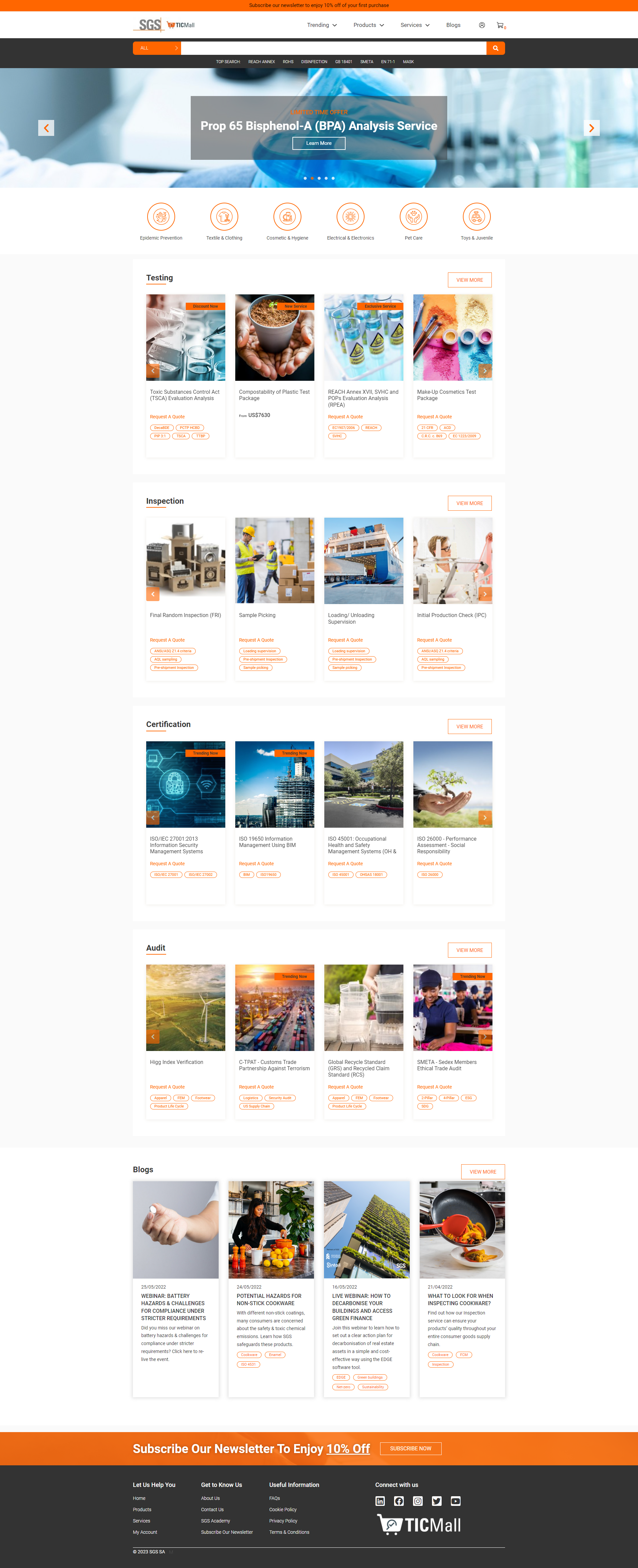
Miracle's SGS TIC Mall case documents a specialist service marketplace combining catalogue browsing, e-commerce and customer-management functions. Its published case shows price or quotation actions where appropriate. Use it as a conversation reference while defining your own commercial rules.
Bring representative service descriptions, approved pricing where available, fulfilment steps and difficult examples to Miracle's e-commerce team. Agree the route for each offer and the acceptance evidence for sales and operations. The resulting scope will be more useful than a request to “put all services in a shop”.
Related service and project
Miracle e-commerce development
Sources
Google Search Central: Introduction to Product structured data
Frequently asked questions
Can one website offer both fixed-price services and quotations?
Yes. Make the route clear on each service page and explain why further details are needed where scope varies. Confirm how the two routes connect to customer records and follow-up.
Should every service page show a price?
Only show pricing the business has approved for that offer. If a price is indicative or depends on scope, explain the relevant conditions. Do not invent a starting price to fill a design template.
Will product structured data make a quotation page eligible for shopping results?
Eligibility depends on the applicable Google feature and its requirements. Google distinguishes product snippets from merchant listings; adding markup alone is not a guarantee of eligibility or display. Check whether the service and page fit the specific feature.
Planning something similar?
Talk to Miracle