

Plan Music and Usage Before Your Corporate Film Edit
Plan music around the film’s real destinations. Use a reusable usage brief, a practical audition method and a release checkpoint before the edit depends on one track.

- List the publishers, channels, versions, territories and planned period of use before selecting a final track.
- Keep creative approval and permission verification separate until both are resolved.
- Retain a track-specific usage record and recheck it when distribution or reuse changes.
The edit works beautifully with the chosen track. Then someone asks for a paid social version, a distributor wants to publish it, or the exhibition team needs a different cut. If those uses were never part of the music brief, the team has a new question to resolve just when the film appears finished.
Start music planning with two parallel decisions: does this track support the film, and has the intended use been checked? Neither answer substitutes for the other. This guide provides a production workflow and reusable records. It is not legal advice; uncertain permissions should go to the provider or an appropriately qualified adviser.
Write the usage brief before browsing tracks
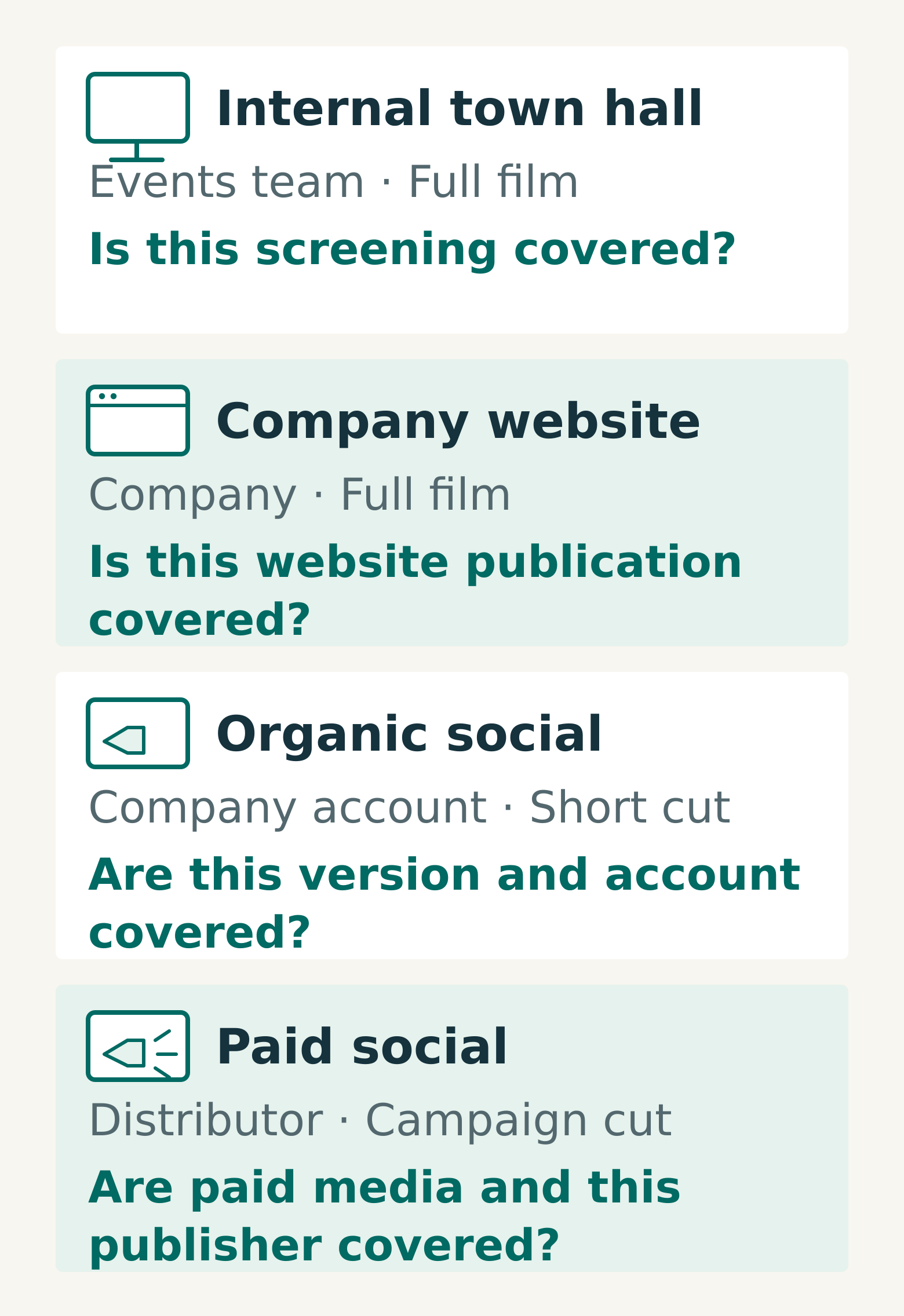
“Corporate video” is a creative category, not a complete description of distribution. List each planned use separately, including who will publish or screen it. Your company website, a partner's social account and an event organiser's screen should not be bundled into “online and events”.
For each use, record:
- Publisher or screening organisation and account, where known.
- Channel and whether distribution is organic, paid or internal.
- Film version, including language, duration and any later adaptations.
- Intended territory and period of use.
- Person responsible for confirming the relevant permission.
- Status, supporting record and any unresolved question.
If a field is unknown, mark it as unknown and assign the decision. Avoid filling gaps with “worldwide, forever, all media” unless that is genuinely the requirement and the proposed permission has been checked against it.
Keep references separate from candidate tracks
A familiar song can explain a musical direction. That does not make it an approved production asset. Label creative references clearly and keep them separate from the shortlist intended for the finished film.
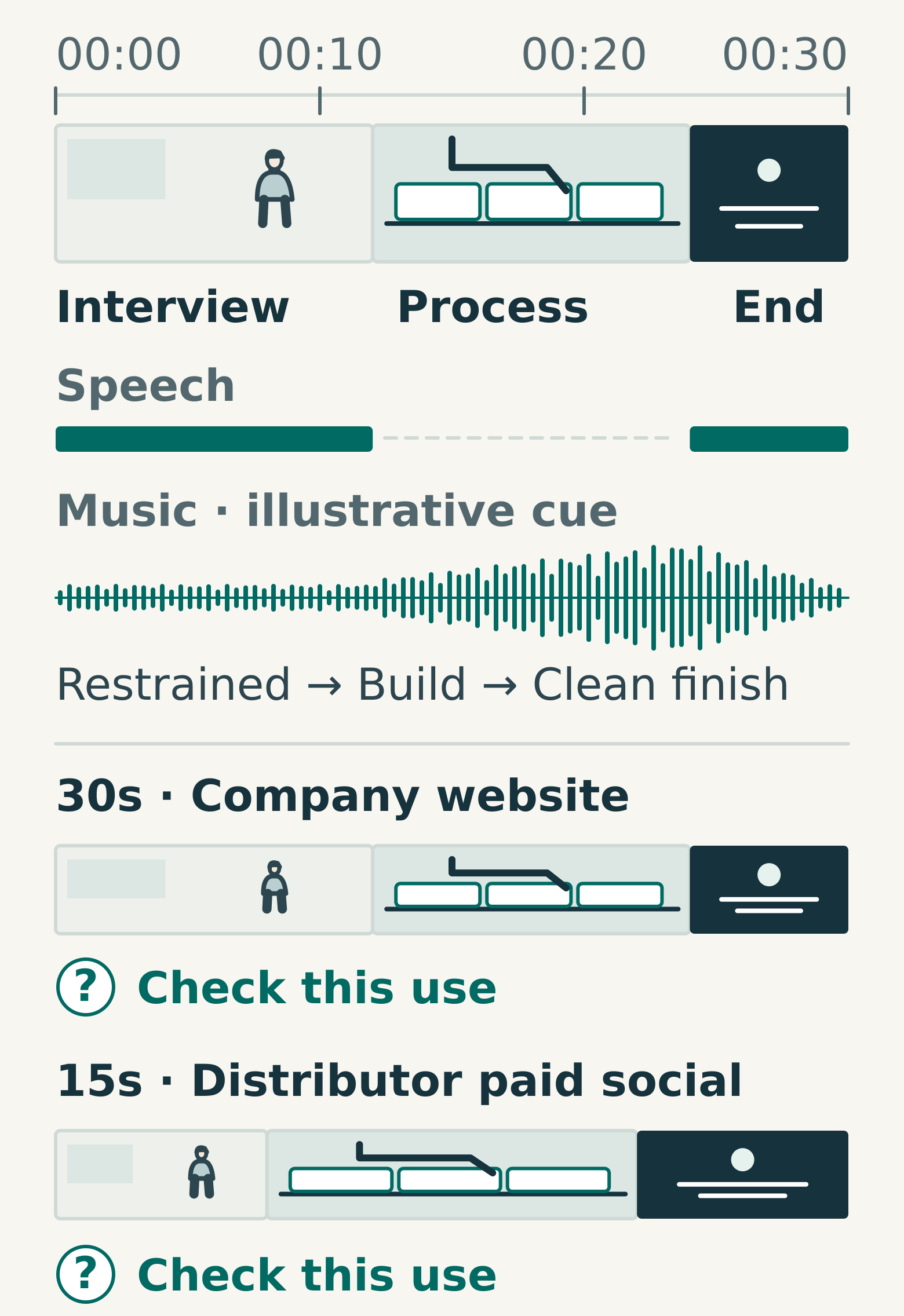
Describe the role of the music using observable language. For example: “A restrained opening beneath the interview; a gradual lift through the process sequence; a clean ending before the final spoken line.” This is more useful than asking only for something premium, cinematic or inspiring.
State avoidances too. You may want no prominent vocal beneath speech, no triumphant shift during a serious subject and no abrupt ending at the call to action. Note whether the film needs one continuous mood or a deliberate transition. Ask the editor which parts of the track would be used, rather than approving a whole song after hearing only its strongest passage.
Audition against the same piece of film
Compare shortlisted tracks under one representative extract containing speech, a visual transition and a pause. Keep the audition conditions reasonably consistent. A louder option can feel more impressive without being better suited to the message.
Use four questions, with a simple rating for each: works, needs adjustment, or unsuitable.
- Speech: can you follow the words without effort?
- Tone: does the music fit the subject and the speaker's intent?
- Structure: can it support the opening, development and ending?
- Versions: is there a workable approach for the planned shorter or alternate cuts?
Write one reason beside each rating. “Track A: needs adjustment; its vocal phrase competes with the speaker's name” gives the editor a problem to assess. “Track B is more corporate” gives little direction.
Do not turn the ratings into a scientific-looking score. They are a discussion tool. One important mismatch can outweigh several attractive qualities, and the editor may be able to resolve a local problem without changing the whole track.
Give the permission owner a specific question
Ask about the identified track and the completed usage brief, not “Are we covered for music?” Keep the source, track identifier, proposed licence or permission record and publishing arrangements together.
Hong Kong's Intellectual Property Department identifies musical works and sound recordings among the categories protected by copyright. That makes it sensible to ask what the proposed permission actually covers rather than treating access to an audio file as an answer. See the IPD's copyright overview.
Provider terms also differ. For example, Artlist's licence terms distinguish its Social and Pro licences, including conditions relevant to client work and paid media. This is an illustration of why the exact plan and terms matter, not a recommendation of a provider or a statement that one plan suits your project.
Have the responsible person record the verified scope, any restrictions and anything still awaiting clarification. Where applicable, ask about required platform registration or clearance steps, publication timing, adaptations and whether raw music files may be handed to another organisation. Do not assume “royalty-free”, a subscription or a previous purchase settles every question.
For exhibition or other public screenings, ask the screening organiser to check any venue or public-performance obligations separately where relevant. A licence permitting use of music in the finished film may not cover royalties payable to collecting societies; see the public-performance section of the Artlist terms.
Worked example: one film becomes four uses
Imagine a Hong Kong engineering company preparing an anniversary film for an internal town hall. Its first music brief covers that screening. During editing, marketing adds a website version and an organic social cut. A distributor then asks for a paid campaign using a shorter extract.
The coordinator adds three rows to the usage record. The distributor is named as a separate publisher, and the paid campaign is marked as awaiting confirmation. The existing internal-use decision is not silently extended to the new request.
Meanwhile, the editor auditions a second candidate against the same extract. If the first track cannot be confirmed for the full plan, the team has a creative alternative to assess. If it can, the permission owner records the outcome and any conditions before the relevant version is released.
The point is to expose the changed brief early. This hypothetical example makes no claim that any particular licence would or would not cover those uses.
Use a two-part approval before final commitment
Record creative status and usage status separately:
- Creative agreed; usage pending: keep the track temporary and agree how much editing may depend on it.
- Usage checked; creative unresolved: continue auditioning within the verified options.
- Both agreed: record the chosen track and approved uses together.
- New use proposed: reopen the usage check for that change before release.
This avoids the ambiguous instruction “Music approved”. It also helps the editor explain the consequence of replacing a track after transitions or scene lengths have been built around it.
Copy this music handover record
- Project and approved film versions:
- Track title, creator, identifier and source:
- Selected audio file/version and edit notes:
- Creative approver and approval date:
- Licence holder or permission recipient:
- Checked uses, publishers, channels, territories and period:
- Permission evidence and date checked:
- Conditions or required platform steps:
- Outstanding questions and responsible person:
- Who must be consulted before a new use or adaptation:
Keep this record with the finished-film handover. Before release, compare the actual distribution plan with the checked uses; a permission decision for an earlier brief should not be mistaken for a decision on the final one.
For a film already in progress, start by listing every person or organisation expected to publish it. That small exercise often reveals the questions worth settling before the next edit. Discuss your corporate film and distribution brief with Miracle.
Frequently asked questions
Can we use music from a company presentation playlist?
Treat it as a creative reference until the intended film use has been verified. Access to a song does not describe the permissions for synchronising it with a film, distributing that film or allowing another organisation to publish it. Give the responsible person the track and actual usage brief.
Does royalty-free mean that every use is permitted?
Do not use that label as the approval decision. Ask the responsible person to check the specific licence, track, licence holder and intended uses, then retain the evidence. Provider terms can distinguish channels, client work, adaptations and other conditions.
What should we do when someone requests a new cut later?
Record the proposed version, publisher, channel and purpose, then check them against the retained permission evidence before release. If the existing record does not resolve the question, obtain clarification. Also ask the editor about the creative and production implications of the new version.
Planning something similar?
Talk to Miracle