

How to Plan a Company Anniversary Book in Hong Kong
Plan a company anniversary book from archive research to bilingual editing and print delivery, with clear decisions on source material, approvals, design, proofing and handover.
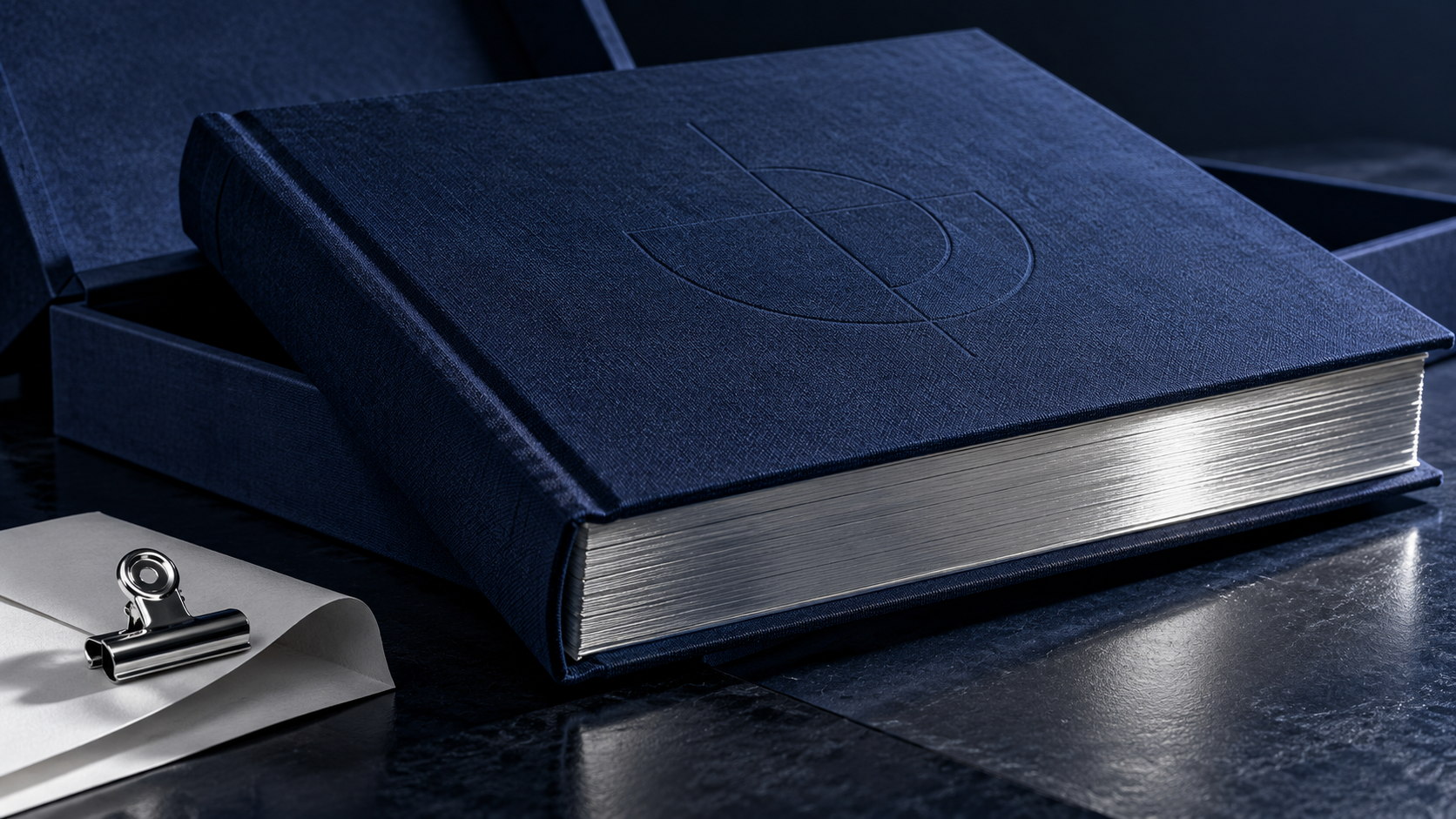
- Build a verified source inventory before committing to a detailed page plan.
- Treat bilingual editing as a coordinated editorial process with named approvers.
- Agree print specifications, proof stages and delivery requirements before final artwork.
Define the readership, build a checked archive and test a sample chapter before committing to the full anniversary-book layout. These steps help the team choose which stories and images belong in the publication.
For a bilingual book, agree the language layout, names, terminology and final text approver early. Then work backwards from the date finished copies must arrive.
Keep content approval, page approval and print approval separate. A checked manuscript still needs design review, and approved pages still need the printer’s production checks.
1. Decide what the book should do
Choose the primary readership: employees, clients, partners, guests at an anniversary event or a wider public audience. A staff keepsake may give more space to personal stories; a publication for external readers may need more context about the company's work.
Write a short editorial proposition. A hypothetical engineering business, for example, might organise its book around how its projects and working methods developed, supported by a timeline and staff recollections. That gives the team a reason to select material rather than trying to include every available photograph.
Define the deliverables together: printed book, digital reading edition, launch material and any extracts for other channels. Record the distribution quantity and delivery locations as planning assumptions until confirmed.
2. Turn the archive into a usable inventory
Create one register for photographs, documents, logos, publications, awards and interview material. Give each item a unique identifier and record:
- Description, source and file location
- Date, people and location, where confirmed
- Person responsible for checking the facts
- Available original or highest-quality file
- Proposed chapter or story
- Reproduction permission and credit status
Keep “unknown” visible when a date or name cannot be established. Do not turn a plausible recollection into a confirmed caption. If accounts disagree, ask the editorial owner to resolve the point or change the wording.
Request original images before relying on pictures extracted from old presentation decks. Let the designer assess whether each image will reproduce well at its proposed size. An important but limited-quality photograph may work as a smaller archival item rather than a full-page image.
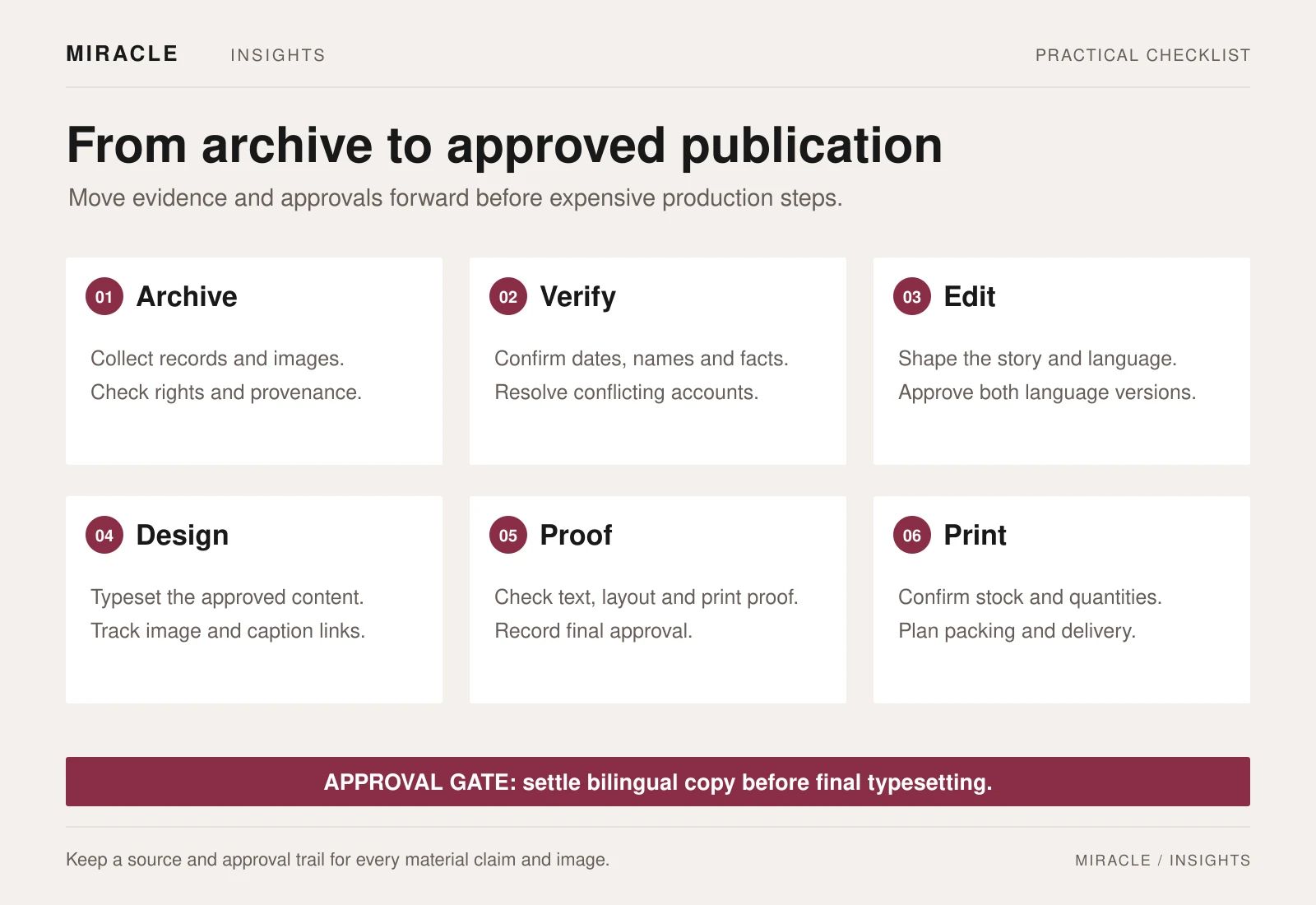
3. Build chapters around a readable story
Use the inventory to test the proposed structure. Can each chapter be supported by enough material? Are there gaps that require interviews or further research? Does the sequence make sense to someone who does not already know the company?
A practical outline might combine a short opening, a timeline, thematic chapters, selected people stories and a closing section. Treat this as an example, not a required formula.
Assign an approximate page allowance to each section. List the purpose, key sources, proposed images and text owner beside it. Confirm the broad page count and binding implications with the print partner before expanding the manuscript.
A page plan should remain adjustable while the evidence and story develop. Approving an exact layout before the content is ready can force later material into spaces that do not suit it.
4. Coordinate bilingual editing before typesetting
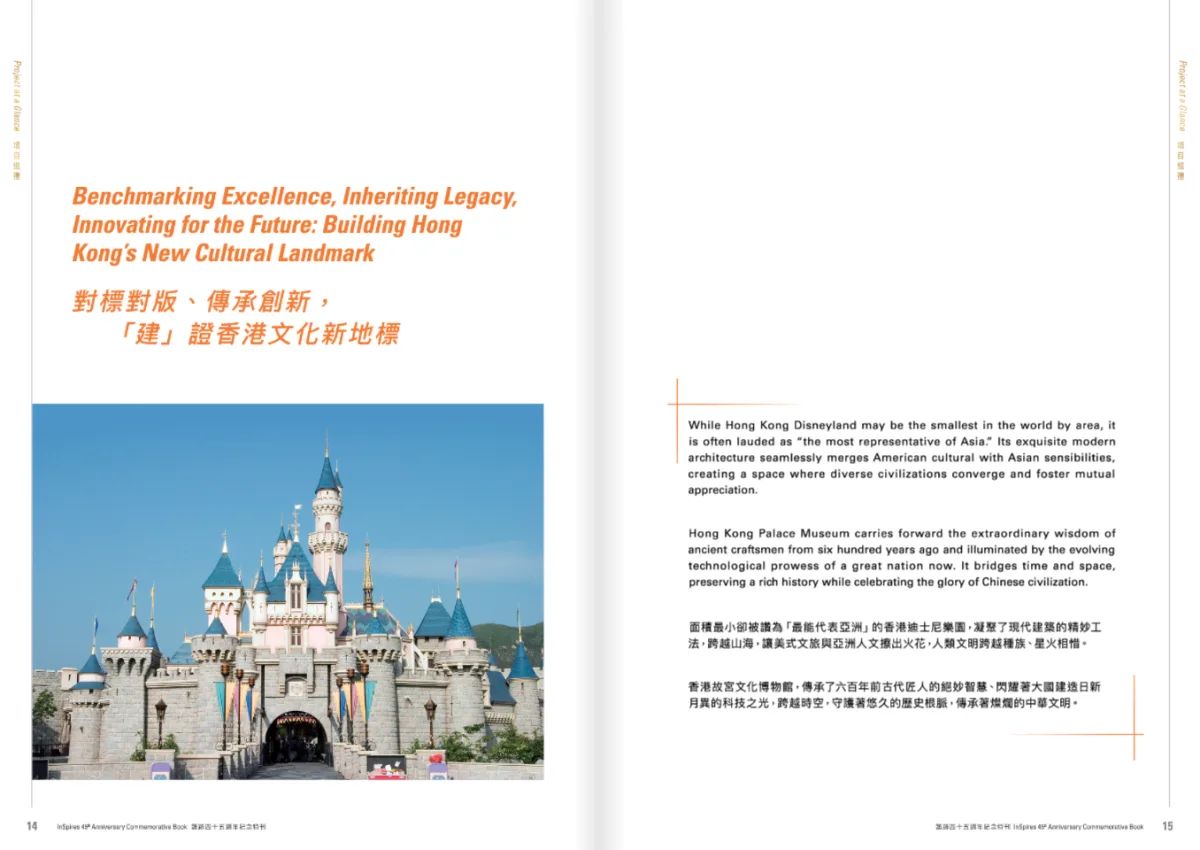
Decide whether the book uses parallel Chinese and English text, separate language sections or separate editions. Test a representative spread with real copy before applying the approach to the whole book.
Create a shared terminology list for company names, business units, job titles, projects and recurring technical terms. Distinguish a person's current title from the title they held in the period being described.
Name the source-language editor, translator, language reviewers and final approver. Agree which text is authoritative when resolving a discrepancy. Translation should follow sufficiently stable source copy, with later changes tracked across both languages.
Check captions, charts, contents pages and acknowledgements as carefully as the main narrative. Maintain a paired change log so that an approved correction to a date or figure reaches both versions. Leave room in the schedule for a final bilingual check in the designed pages.
5. Approve a representative design system
Review a small set of sample pages before full layout: opening spread, text-heavy spread, photographic sequence, timeline and any recurring profile format. Use genuine approved material so the sample reveals practical constraints.
Assess legibility, image treatment, caption placement, navigation and how the two languages work together. If historic photographs are restored or altered, agree the treatment and keep the originals. Avoid changes that could misrepresent the historical record.
Ask the designer to explain paper, binding and finishing options using samples where available. Consider how the book opens, feels, travels and will be stored. The most elaborate finish is not automatically the most suitable choice for the readership or distribution plan.
For a visual reference, see the China State Construction 45th Anniversary Book. Use the example to discuss format, page pacing and the reading experience you want.
6. Separate editorial approval from print approval
Use distinct checkpoints for text, designed pages and production files. An editorial sign-off confirms content; it does not by itself confirm paper, colour reproduction or binding.
Before release to print, check the title, contents, page references, names, dates, captions, credits and both language versions. Keep a single consolidated correction list and an agreed final approver.
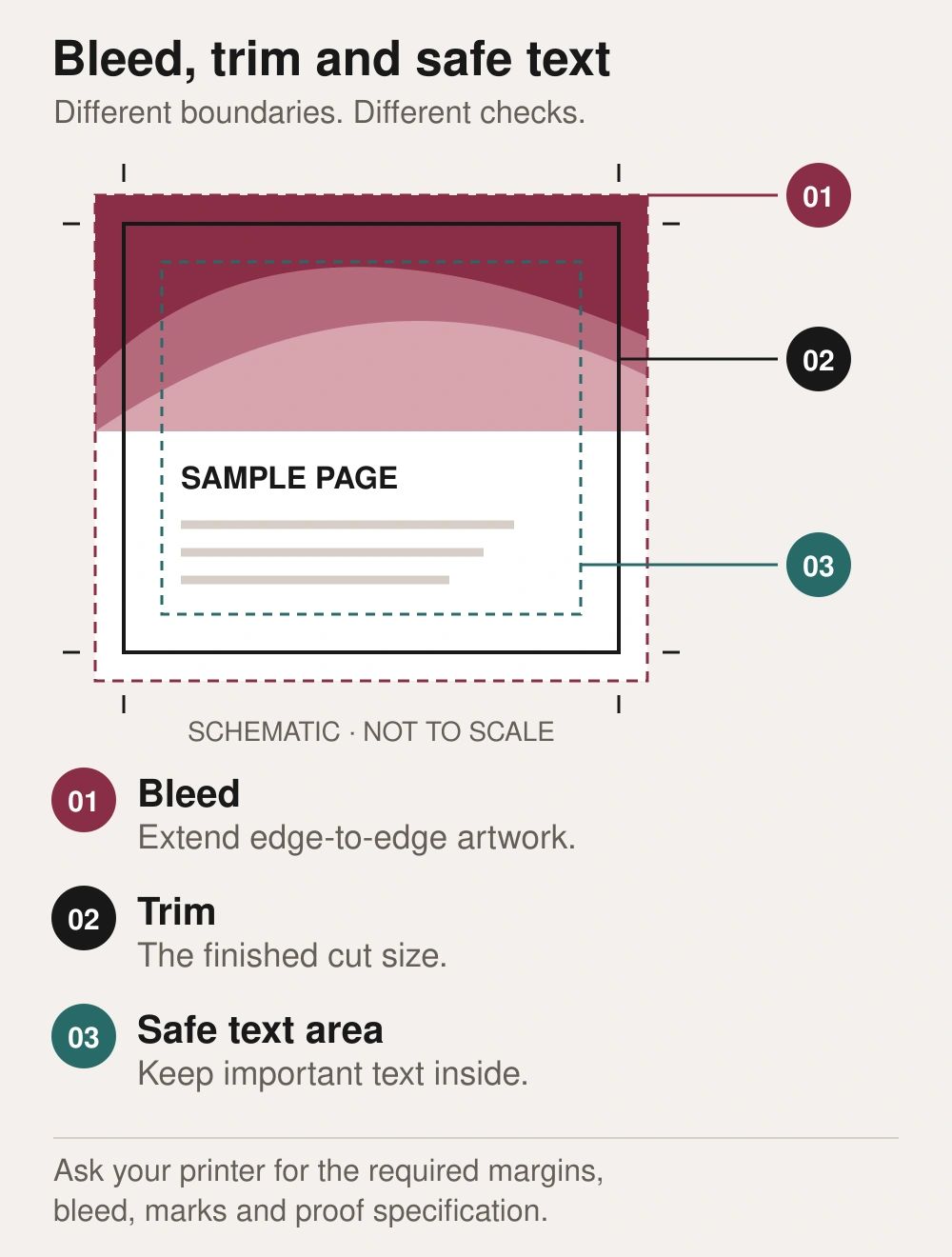
Have the designer and printer confirm the export settings, colour profile, bleed, trim size and required marks. Adobe's print-ready PDF guidance identifies checks such as current links, available fonts and preflight errors. Its bleed guidance also stresses verifying the print provider's requirements.
Agree which proofs or physical samples will be provided and what each approval covers. A screen review alone cannot establish how a chosen paper and finish will feel.
7. Plan delivery and the final archive
Confirm the quantity, packing method, delivery addresses, receiving contacts and any split deliveries. Include the time needed to inspect copies before an anniversary event or distribution date.
Agree how defects or shortages will be reported and handled. Keep the approved production specification and proof record available for that discussion.
For handover, list the print PDF, digital edition, final text, approved image register and editable files included in the agreement. Adobe's packaging documentation explains how an InDesign handover can gather linked assets and a report. Confirm separately what may be transferred under the relevant licences.
Discuss your anniversary publication
Send the audience, anniversary milestone, available archive, language requirements, approximate quantity and required delivery date through Miracle's project enquiry form. Include any planned digital edition so the editorial and production scope can be considered together.
Frequently asked questions
How early should we start?
Build the schedule around archive readiness, interviews, bilingual review, design and the printer's confirmed lead time. The quantity of unverified material matters as much as the page count.
Can we use photographs from old brochures?
Assess the best available source, reproduction quality and permission status. A scan may be usable in one treatment but unsuitable for another; test important images early.
Should Chinese and English sit on the same page?
Choose according to readership, content length and reading experience. Compare sample spreads using real text before committing to a layout system.
Can the print file also serve as the digital edition?
Plan the digital edition as a separate deliverable. Decide its navigation, links, accessibility requirements and file size rather than assuming the printer's PDF is ready for every reader.
Planning something similar?
Talk to Miracle